

How Can Nausea Be Managed to Support Long-Term Outcomes After Bariatric Surgery?
How Can Nausea Be Managed to Support Long-Term Outcomes After Bariatric Surgery?
 Written by Ingrid Kruizinga
Medical Affairs Specialist
Nausea after bariatric surgery can have multiple contributing factors, including the timing and method of supplement intake. For people living with lifelong nutritional needs after bariatric surgery, taking a daily multivitamin is essential to protect long-term health. Yet in clinical practice, we see how fragile that routine can be. One challenge rises above the rest: gastrointestinal side effects, including nausea. These effects often appear shortly after intake and, for some, become the reason they stop supplementing altogether.
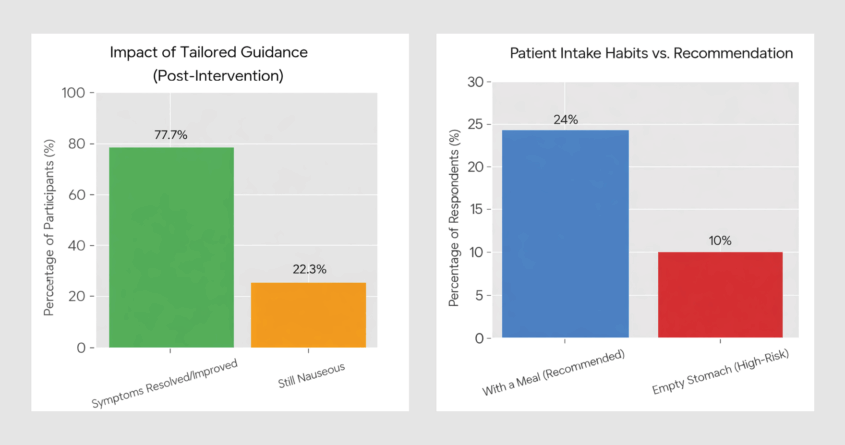
A new FitForMe study, submitted for publication (Kruizinga & Smelt, 2025), brings renewed clarity to this issue. It highlights how closely gastrointestinal tolerability is linked to everyday intake habits. The findings are compelling: 55 out of 75 participants who struggled with GI side effects (73.3%) reported improvement in symptoms after following specific intake guidance.
This article highlights the most relevant insights, explores behaviours that support tolerability and consistency, and shows how practical adjustments can support long-term adherence.
Why Gastrointestinal Tolerability Remains a Key Barrier in Bariatric Supplementation
Despite clear clinical recommendations for lifelong multivitamin use, many patients struggle to maintain daily intake. From earlier research by Smelt and colleagues (2021), we know that gastrointestinal complaints are the reason 58.5% of people do not take supplements at all. Of all gastrointestinal complaints, nausea was the most frequently reported (85.4%) (Smelt et al., 2021).
At FitForMe, we recognise gastrointestinal side effects, including nausea, dizziness, bloating, and other concerns, as meaningful barriers with a negative impact on quality of life and adherence. That is why we are committed to understanding these experiences better and have initiated several studies with people who encounter challenges during supplementation.
What We Found (Kruizinga & Smelt, 2025, submitted for publication):
- GI side effects, including nausea, were more commonly reported by Sleeve patients than RYGB patients
- Many participants reported taking their supplement on an empty stomach
- Side effects occurred most often within the first 10 minutes after intake
- Participants reported additional complaints, including dizziness, hot flashes, bloating, diarrhoea, and stomach pain
Notably, after adjusting intake behaviours based on personalised advice, 73.3% of people who experienced GI side effects reported a clear reduction in symptoms.
“When patients understand how to take their vitamins, not just that they should, comfort improves and consistency follows.”
— Ingrid Kruizinga, Medical Affairs Specialist
What Helps? Practical Intake Strategies That Reduce GI Side Effects
The study evaluated intake guidance and identified several behaviours that consistently supported tolerability. These strategies offer a clear, evidence-based framework for supporting patients in everyday practice.
Key Intake Recommendations
Start supplementation at the right moment
Supplementation should begin once patients are able to consume substantial portions of solid food after surgery.
Consider individual format preferences
Different formats may be experienced differently by individuals. Some patients reported better tolerability with chewable options, potentially due to a more gradual release of nutrients. However, individual response varies, and selecting the most suitable format should be personalised.
Take the multivitamin with the most caloric meal
Lunch or dinner proved most effective. Avoiding intake on an empty stomach can significantly support tolerability.
Adjust the intake method to support gradual nutrient release
Practical approaches included:
- Breaking a tablet into smaller pieces
- Taking portions with different meals
- Sucking rather than chewing
For patient-friendly guidance, HCPs may also refer to these intake tips.
From Insight to Innovation: A Softer Multivitamin Option for Daily Care
At FitForMe, we believe patients deserve solutions that feel as supportive as they are scientifically grounded. This study reaffirmed an important principle: when supplementation fits better into daily routines, people are more likely to stay consistent.
These insights contributed to the development of a new soft-chew multivitamin, launching in early 2026. Designed as a gentler, once-daily option, it complements our existing formats and provides an additional choice for patients who prefer softer textures, benefit from simplified routines, or experience challenges with daily intake.
- WLS Forte Soft Chew (Gastric Bypass)
A once-daily peach-mango soft chew with 18 nutrients aligned to bypass needs, including elevated B12, D3, and folic acid. - WLS Optimum Soft Chew (Gastric Sleeve)
A once-daily red-berry soft chew with 18 nutrients aligned to sleeve-specific needs, including higher levels of B12, D3, folic acid, zinc, and biotin.
Both formats feature a gentle texture, no added sugar or artificial colours, and are designed with tolerability and long-term adherence in mind.
Key Takeaways
Gastrointestinal side effects, including nausea, are common barriers to long-term multivitamin adherence after bariatric surgery. However, these challenges can often be addressed through clear guidance, clinical insight, and thoughtful format options. With emerging evidence, considered innovation, and close collaboration with healthcare professionals, FitForMe remains committed to supporting lifelong supplementation routines built on clarity, confidence, and ease.
Would you like to learn more about this research study?
Simply contact us using the button below:
Related articles:

How Intake Instructions Can Improve Multivitamin Tolerance After Bariatric Surgery
Poor multivitamin adherence after bariatric surgery stems from tolerability issues, not indifference. Among patients who stopped taking supplements, more than half reported gastrointestinal complaints directly related to multivitamin use. Nausea stands out as the most dominant symptom, with unpleasant taste…

From Checklist to Conversation: The Role of Patient-Centered Care in Multivitamin Adherence
While bariatric follow-up includes foundational elements of respectful care, important gaps emerge in personalization around multivitamin use. Open-ended questions are often replaced by closed, protocol-driven checks. When patients report nausea or tolerance difficulties, these are sometimes acknowledged but rarely followed…
