

Stronger After Surgery: Nutrition Insights for Physically Active Bariatric Patients
Stronger After Surgery: Nutrition Insights for Physically Active Bariatric Patients
 Written by Ingrid Kruizinga
Medical Affairs Specialist

We know from every type of weight-loss approach that lifestyle changes — and especially regular, structured physical activity — are key to keeping the kilos off, protecting lean muscle, and improving overall health.
But here’s the catch: when it comes to nutrition and hydration for active post-bariatric patients, the picture is still a bit blurry. Most postoperative guidelines focus on supplements and calorie restriction, without really considering the extra demands exercise places on the body.
That’s why the recent systematic review by Stocker and colleagues (2022) is so valuable — it helps shine a light on this knowledge gap.
Nutritional Considerations for Bone Health After Bariatric Surgery
Energy
What do we know about calorie needs in active post-bariatric patients?
The short answer: not as much as we’d like. Most guidelines suggest an intake of around 1200–1500 kcal per day. But these numbers don’t take into account how much someone exercises, their body composition, or even sex differences.
What research does show is that patients who train intensively or for long periods may struggle to get enough energy. And that matters — because too few calories can lead to loss of muscle mass, exactly what we want to avoid.
Protein: the star of the show
Of all the nutrients, protein gets the most attention in post-bariatric care — and for good reason.
- The baseline advice is clear: aim for at least 60 g per day, or up to 1.5 g per kilo of ideal body weight.
- But research suggests that going higher — around 90–108 g per day (thereof 30-48 g whey protein), often with whey protein supplements — combined with resistance training can boost muscle strength and may even help build fat-free mass.
- The challenge? Many patients struggle with protein-rich foods after surgery, especially meat. That’s where protein supplements can make a real difference.
Why does it matter so much? Because protecting lean muscle isn’t just about strength and mobility — it’s also about long-term metabolic health and lowering cardiovascular risk.
Carbs and fats: still a grey area
When it comes to carbohydrates and fat, the evidence is surprisingly thin.
Carbs can be tricky after bariatric surgery — too much simple sugar can trigger dumping syndrome or reactive hypoglycemia, neither of which is a good match for exercise. For patients training at higher intensities, a small low-glycemic snack before activity (think ~15 g carbs with 5–8 g fat) may help keep blood sugar steadier.
As for fats, the recommendations haven’t really changed. Moderate amounts are fine, but going too high can work against weight-management goals.
Micronutrients: small but mighty
Long after surgery, micronutrient deficiencies remain one of the most common challenges — no matter how active a patient is. The usual suspects include vitamins A, D, calcium, iron, zinc and copper (depending on surgery type).
So far, research doesn’t show that exercise itself raises micronutrient needs. Still, sweat-related losses of minerals like iron could tip the balance, especially in patients who train harder or longer.
The takeaway? Routine lab checks are essential. For active post-bariatric patients, keeping a close eye on micronutrient status helps prevent deficiencies that could undermine both health and performance.
Fluids: harder than it looks
Staying hydrated after bariatric surgery is not as simple as it sounds. With a smaller stomach and reduced tolerance for fluids — especially plain water — many patients find drinking enough a real challenge.
- Baseline advice: Aim for at least 1.5 liters per day, but avoid drinking within 30 minutes before or after meals.
- When exercising: Add 0.4–0.8 liters per hour of activity, ideally with some electrolyte replacement during longer or more intense sessions.
- Smart swaps: If water isn’t well tolerated, options like yogurt-based drinks, coconut water, diluted juice, or watery foods such as fruit can help. Just watch the sugar content in juices.
Why it matters: dehydration doesn’t just hurt exercise performance — it can also worsen common post-op issues such as postprandial hypotension or orthostatic intolerance.
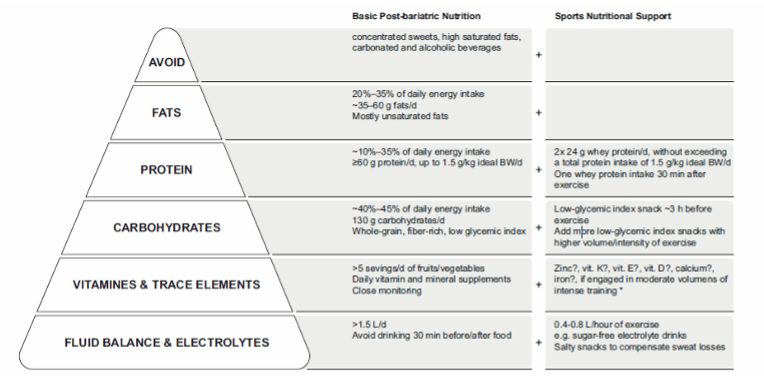
Figure 1.Food pyramid for physically active post-bariatric patients. *Moderate volume of intense training: 2 3 h/d of intense exercise; 5- 6 x /wk. Basic post-bariatric nutrition. BW = body weight. Original Figure by Stocker et al. (2022): 10.1016/j.nut.2021.111577
Safety and Complications
- Hypoglycemia: Rare but documented during exercise, especially in the first 1 to 2 years after surgery. Careful timing of food intake and avoidance of high-glycemic index snacks are important.
- Dumping syndrome: Can significantly reduce exercise capacity, though pharmacologic strategies (e.g. acarbose) have shown benefit in selected cases.
- Endurance exercise: Case reports demonstrate that even marathon running is feasible after bariatric surgery, but fatigue and dehydration present real risks.
What this means in practice
If there’s one message that stands out, it’s this: protein and fluids are key for active post-bariatric patients. Getting more than 60 g of protein per day, especially when paired with resistance training, seems to give real benefits.
The best approach is close monitoring and individualized advice. That means checking-in regularly on protein intake, hydration, and micronutrient status — especially in patients who train harder or more often. With the right support, these patients can exercise safely, protect their muscle mass, and enjoy better long-term outcomes after surgery.
Would you like to learn more about this research study?
Simply contact us using the button below:
Source:
- Stocker, R., et al., Nutrient and fluid requirements in post-bariatric patients performing physical activity: A systematic review. Nutrition, 2022. 97: p. 111577.
Related articles:

How Intake Instructions Can Improve Multivitamin Tolerance After Bariatric Surgery
Poor multivitamin adherence after bariatric surgery stems from tolerability issues, not indifference. Among patients who stopped taking supplements, more than half reported gastrointestinal complaints directly related to multivitamin use. Nausea stands out as the most dominant symptom, with unpleasant taste…

From Checklist to Conversation: The Role of Patient-Centered Care in Multivitamin Adherence
While bariatric follow-up includes foundational elements of respectful care, important gaps emerge in personalization around multivitamin use. Open-ended questions are often replaced by closed, protocol-driven checks. When patients report nausea or tolerance difficulties, these are sometimes acknowledged but rarely followed…
