

Nutrition is the missing variable in obesity care
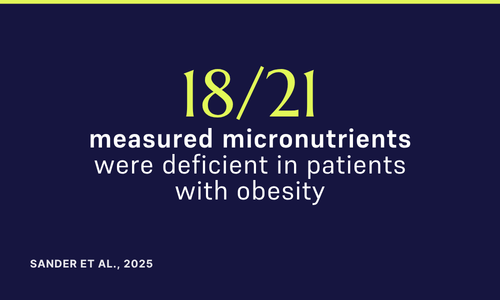
Deficiencies appear before weight loss begins and persist across every treatment pathway
People living with obesity frequently present with chronic micronutrient deficiencies driven by diet quality, altered pharmacokinetics, and medication use.
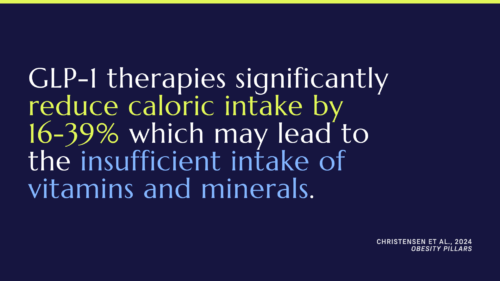
GLP-1 therapies and bariatric surgery introduce further risk, yet nutritional status remains routinely unmonitored.
Micronutrient gaps shape outcomes throughout the care journey
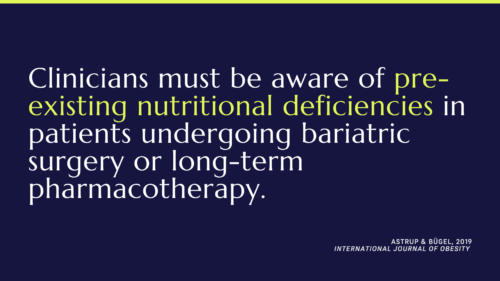
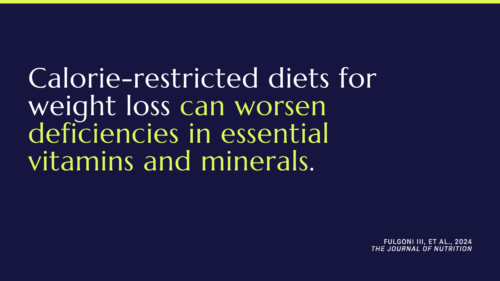
Individuals with obesity are at increased risk of deficiencies in vitamin D, folic acid, and iron – even before any intervention begins. Factors including lower diet quality, altered pharmacokinetics, and prolonged medication use all contribute. These gaps affect energy regulation, immune function, and long-term metabolic health. Three studies that build the case.
Three steps to close the nutritional gap
-
Screen early. Assess micronutrient status at the start of the care journey – deficiencies are often present before any intervention begins.
-
Personalise supplementation. Tailor supplementation to the individual, their pathway, and stage of care – before, during, and after intervention.
-
Monitor beyond weight. Nutritional markers deserve the same routine attention as weight and glucose. Ongoing monitoring catches gaps before they affect outcomes.
The evidence is clear, here’s what to do next
Download the research, stay informed, or talk to a specialist about what this means for your patients.
Related articles:

Nutritional Deficiencies in Obesity Care
Nutrition is the missing variable in obesity care Deficiencies appear before weight loss begins and persist across every treatment pathway People living with obesity frequently present with chronic micronutrient deficiencies driven by diet quality, altered pharmacokinetics, and medication use. GLP-1 therapies and bariatric surgery…

When Recommended Intakes Aren’t Enough: Micronutrient Gaps in Obesity Care
People with obesity often face hidden micronutrient deficiencies, even before treatment begins. Research shows that a low-calorie diet meeting 100% RDI didn’t correct these gaps and some even worsened. Standard RDIs may not be enough, highlighting the need for tailored supplementation.

The Gut in Obesity: More Than Just a Transit Tube
The gut is more than a transit tube. A new review highlights how motility, acidity, enzymes, and bile acids influence appetite, nutrient absorption, and treatment outcomes in obesity. Variability among patients underlines the need for personalized monitoring and tailored supplementation…
